Klaus-Josef Roßfeldt, Schwerte, Germany
1913 Rolls-Royce Silver Ghost
"Roi-des-Belges" Tourer, Chassis-No. #27NA
First owner: Rudyard Kipling (who nick-named this motor car "The Duchess")
Compiled July 2026 for Freiberger, Germany (based on a detailed personal check of the Rolls-Royce Silver Ghost, #27NA, during a visit in July 2026 to the home of the collection where that car is stored — this is a re-vised and extended version of a report from March 2020).
"The Best Car in the World"
When in 1906 the Rolls-Royce Silver Ghost was launched Charles Stewart Rolls and Frederick Henry Royce did create a nimbus: "The best Car in the World". From 1904 onward an initial generation of models had been produced by the car manufacturer and such established a solid basis. With the new Rolls-Royce Silver Ghost the brilliant coup was achieved to position this model at the very top. In 1910 the company suffered from two severe impacts: Charles Stewart Rolls lost his life when his aeroplane crashed – and the second founding member of the company remained invalid after surgery; Frederick Henry Royce for the rest of his life did depend on care by a nurse. It has been just that year 1910 however that Rolls-Royce with Rudyard Kipling, who had been awarded the Nobel Prize, won an impressively prominent customer. The author remained a loyal client of the marque over all the following years. His novels and the stories he published on tours were fascinating stuff for a wide audience; hence he and his motor cars became – although such terms were not used at that time – 'High Value Assets' for the 'Marketing' of Rolls-Royce. Advertising that money couldn't buy!
Rolls-Royce had been founded in 1904 and during the infant period a complete range of models from a modest 10 H.P. 2-cylinder car to a noble 30 H.P. 6-cylinder were offered. The breakthrough though was marked by the Rolls-Royce Silver Ghost. That car made its debut in autumn 1906 at the Olympia Motor Show in London and it became the yardstick of its class. The model was produced until 1925 and did gain an impeccable status; an echo of which can be detected still nowadays as regards the manufacturer's reputation. When the company did exhibit the newcomer at the major motor show of the British Empire, the car was not yet christened 'Silver Ghost'. The motor car was introduced with the designation Rolls-Royce 40/50 H.P. – a term derived from that times' tax classification. The manufacturer did stick to that designation during the whole production-period of the model, i.e. well into 1925. The name Silver Ghost became broadly used in factory documents from then on to enhance separation from its successor, the Rolls-Royce Phantom I. Inevitably a question does arise: What were the inherent merits of the new automobile?
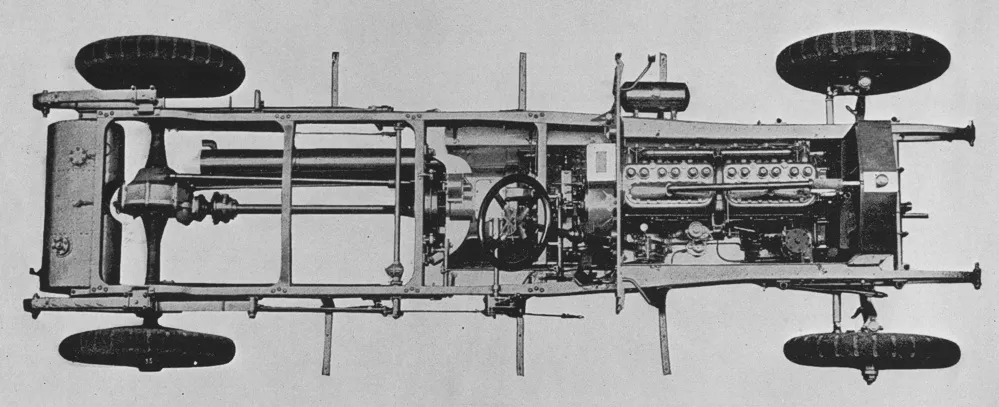
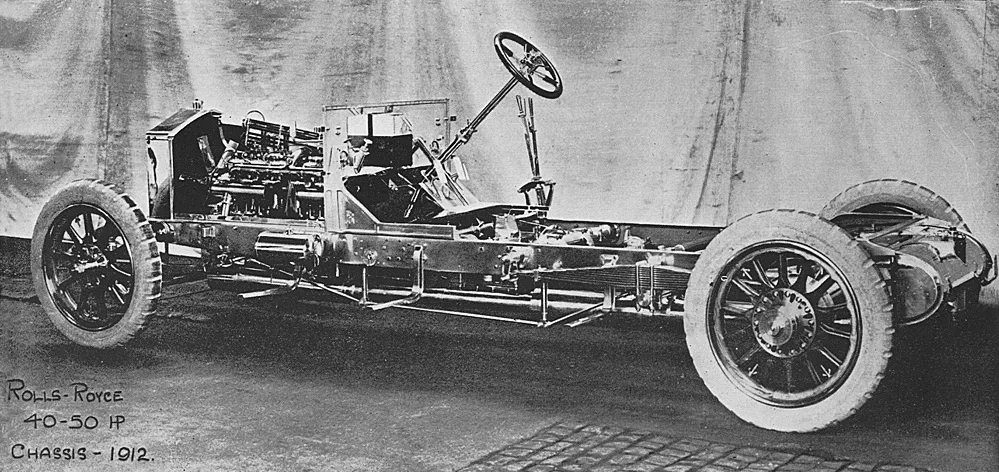
A detailed inspection of the Silver Ghost neither reveals data that could be described with superlatives only nor surprises with breathtaking innovations. In a sum-up could be concluded the layout was solid - however the combination of incredibly careful workmanship of highest level and material of exquisite quality did provide a result that was near perfection. The chassis was a conventional frame with joints neither riveted nor welded (welding at that time was not yet advanced sufficiently to be considered acceptable); tapered bolts were preferred. Rather than opting on screws the fact that tapered bolts are fitting perfectly tight had been a key factor for the decision in favour of the more expensive solution. The frame was stiffened carefully to withstand considerably stress over lengthy periods. Live axles front and rear and brakes only at rear wheels were accepted technical standard at that time. There did exist sceptical arguments towards front wheel brakes because certain competitors had fitted 4-wheel brakes to the detriment of light steering and front axle's roadholding, too. As regards the Rolls-Royce Silver Ghost no sooner than with the final production period 1924/1925 brakes at front became arranged for instead of merely rear brakes, i.e. 4-wheel-brakes were introduced.
Before "The Duchess"
Nowadays as per public opinion the major publication by Joseph Rudyard Kipling (born 30th December 1865 in Bombay, died 18th January 1936, England) has been the "Jungle Book". However the decades around the turn of the previous century showed a different basis for this author's fame – and that spread far beyond his home country's borders, even beyond the British Empire. At least from 1907 onward after having been awarded the Nobel Prize for Literature Kipling enjoyed the status of a celebrity. Beside his novels he wrote poems and short stories; many of these were published 'circumnavigating the traditional book-market' in magazines and newspapers. Thus what he compiled became available for a broad audience via media of considerable influence, almost of monopoly-position during the period before broadcasting and television had been invented. Rudyard Kipling had an impeccable image with a wide audience, not least because in a society separated by strict "class-barriers" he had set a mark by not accepting to be elevated to become an aristocrat. His interest in motor cars had started about the turn of the century. Initially he had 'leased' as would be stated nowadays one with a chauffeur and then he bought a steam-engined car from US-production, a Locomobile. Before long Rudyard Kipling decided to acquire a Lanchester, hence did switch to prefer a petrol-driven motor car. Although almost forgotten by now the Lanchester did enjoy a fine reputation due to good quality and technical layout which for that period showed 'high-tech-niveau'. To have chosen a Lanchester was an indication how carefully Rudyard Kipling had selected from various offers in the market. Nonetheless it was during the following period he learned the peculiarities combined with keeping a motor car. Permanent reliability of the Lanchester depended on detailed maintenance and at regular intervals the car had to be returned to the manufacturer for time-consuming service-work. After the author in 1906 had bought a Daimler he didn't find that an improvement. That Daimler had been, of course, one from the production of the English manufacturer, who had a license to use the name of the German motor car pioneer.
Claude Goodman Johnson had a more important position at the company than is expressed by his title Marketing-Director; his commitment has been so vital that his work earned him the sobriquet "The Hyphen in Rolls-Royce". Such reputation was fully justified as can be shown on the example of his meeting with Rudyard Kipling. When the author who has been very keen on long-distance tours once again felt uncomfortable because he couldn't rely on his motor car as that was "for inspection at the works" and he had to schedule his plans to railroad-timetables. In Vernet-le-Bains he met Lord Montague of Beaulieu and was invited to tours on board his lordship's Rolls-Royce Silver Ghost on which he commented quite favourably. By coincidence C.G. Johnson did stay at the same hotel and offered Rudyard Kipling he should use Johnson's Rolls-Royce Silver Ghost. Kipling's argument that his chauffeur had no experience as regards a Rolls-Royce motor car was no obstacle for C.B. Johnson who decided on the spot to provide a works driver, too. From such action resulted that Kipling in 1910 did order a Rolls-Royce Silver Ghost. As was standard the car was sold in the form of „chassis cum engine", i.e. as a frame completed with engine and drivetrain. Exactly complying with customer specifications the coachbuilder Barker then erected a body. The car was delivered 30th December 1912 and Kipling obviously was so fond of his Silver Ghost, chassis-number #1494, registered LC 7507 that he coined a nickname "Green Goblin". However there is reason to speculate, the author, although satisfied by the impeccably smooth operation detected one or the other point of the coachwork as not entirely perfect. Less than a year passed before he ordered another car from July 1911 onward he employed the Rolls-Royce Silver Ghost, chassis number 1723 and had that registered again LC 7507 by making use of a regulation in the UK that permitted to transfer a registration. Kipling didn't want to give up 'his personal registration'; that was one issued with a 1905/06 series in London and originally had been on that Daimler acquired by Kipling in 1906. Similar to having decided for his 'Green Goblin' on coachwork by Barker in the form of a Landaulette, i.e. a closed body with collapsible hood above the rear seats, for #1723 on a Landaulette by Barker was opted.
For a period of some two years this Silver Ghost was employed before it was traded-in with Rolls-Royce for a new Rolls-Royce Silver Ghost that became a car which Kipling did keep over a remarkably long period. That was #27NA delivered just prior to Christmas 1913 on 23rd December. As regards the body Kipling did stick to the coachwork he was familiar with and ordered a Landaulette however as regards the coachbuilder he decided on a change to Hooper & Co. (Coachbuilder) London.
As regards research on Rolls-Royce Silver Ghost as the doyen is considered John Fasal from England who has compiled an opulent two-volume compendium „THE EDWARDIAN ROLLS-ROYCE" with an incredible wealth of details as regards Rolls-Royce Silver Ghost. When some 1,000 pages were filled the list merely included cars that had been made up to and including February 1917. Fasal's "Standard Reference Book" with its title reflecting the period to be known in the British Isles as "Edwardian" (i.e. named after the reign of His Majesty The King Edward VII) is listing #27NA, of course, as it was produced during that time.
It is known of Rudyard Kipling he left to handle his Rolls-Royce Silver Ghost exclusively to his chauffeur; he himself never had a driving license. Nonetheless he devoted a serious interest to technical aspects and especially followed progress as regards motor car manufacturing and motor cars' particular merits. One facet of this enthusiasm has been he supplied his readers with competent information from this field. His fascination was so far-reaching he made a sketch on a "live-saver jacket for aeronauts" – or to use a modern description "an airbag-jacket to protect pilots in case of accident".
He was well aware of Rolls-Royce's intention to phase-in a considerable number of advanced modifications into their 1913 "A-series". These were so significant an alteration as regards the chassis-numbering system resulted from consecutive number to a combination of letters and figures. For quite some time though from factory records can be found both lines were used parallel – and according to the "old system" here and there the number 2738 is found in addition or instead of the chassis-number #27NA.
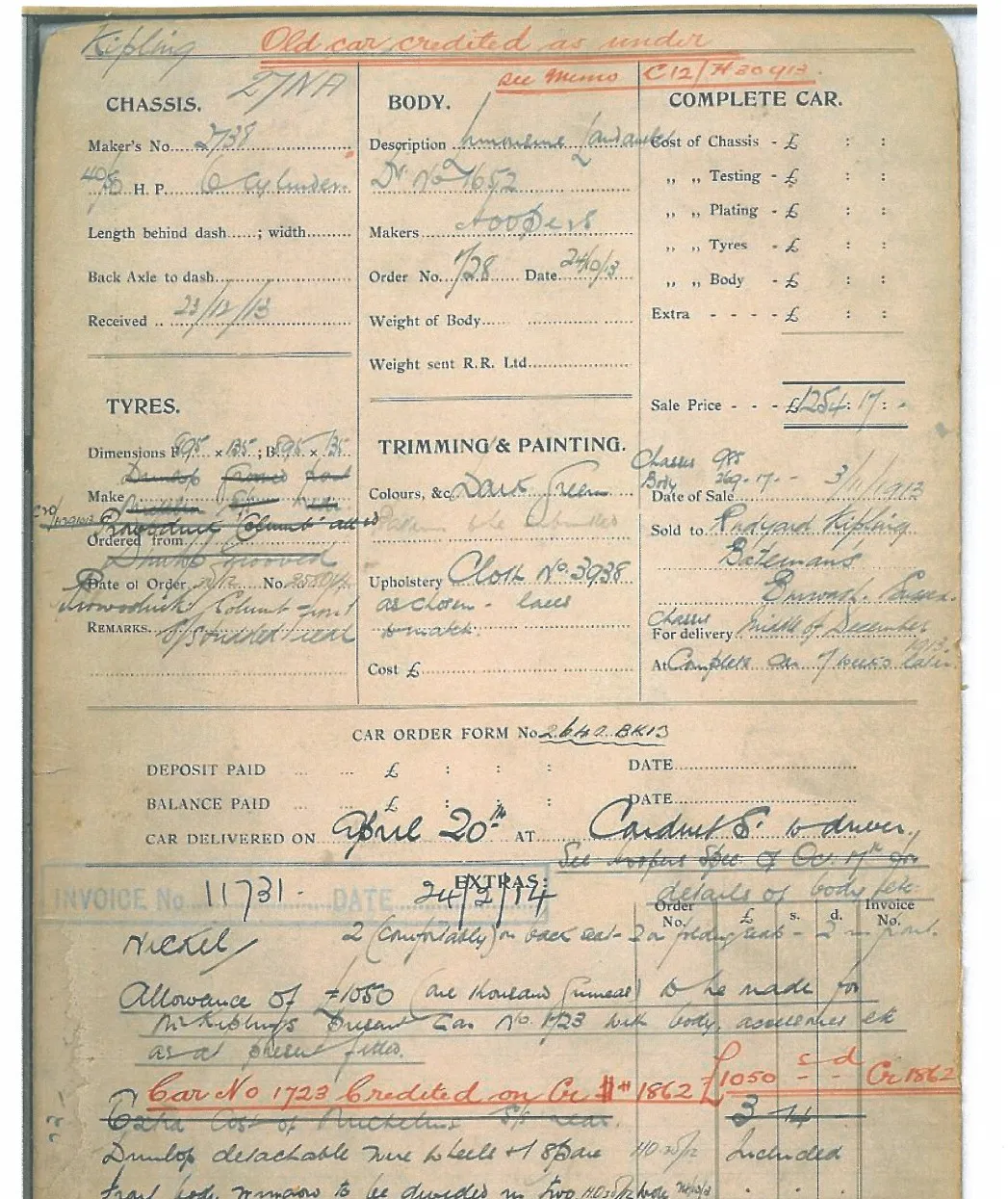
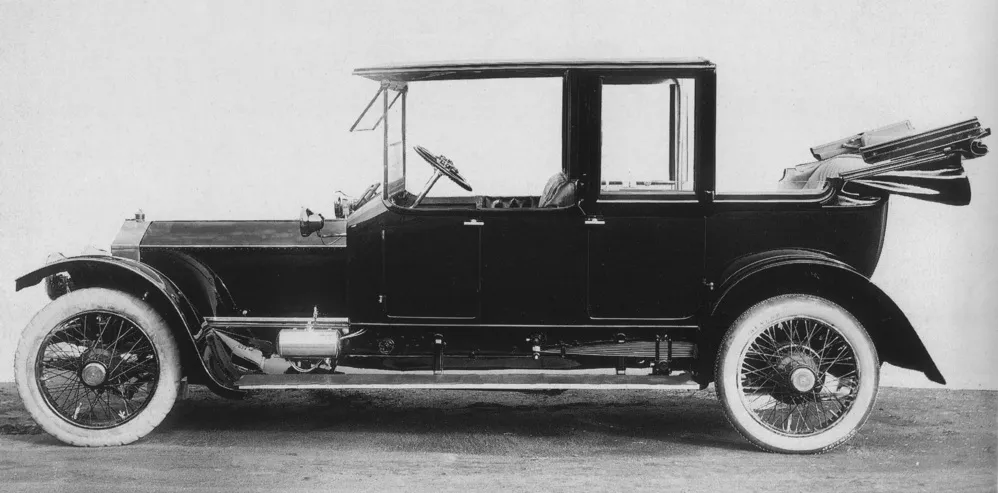
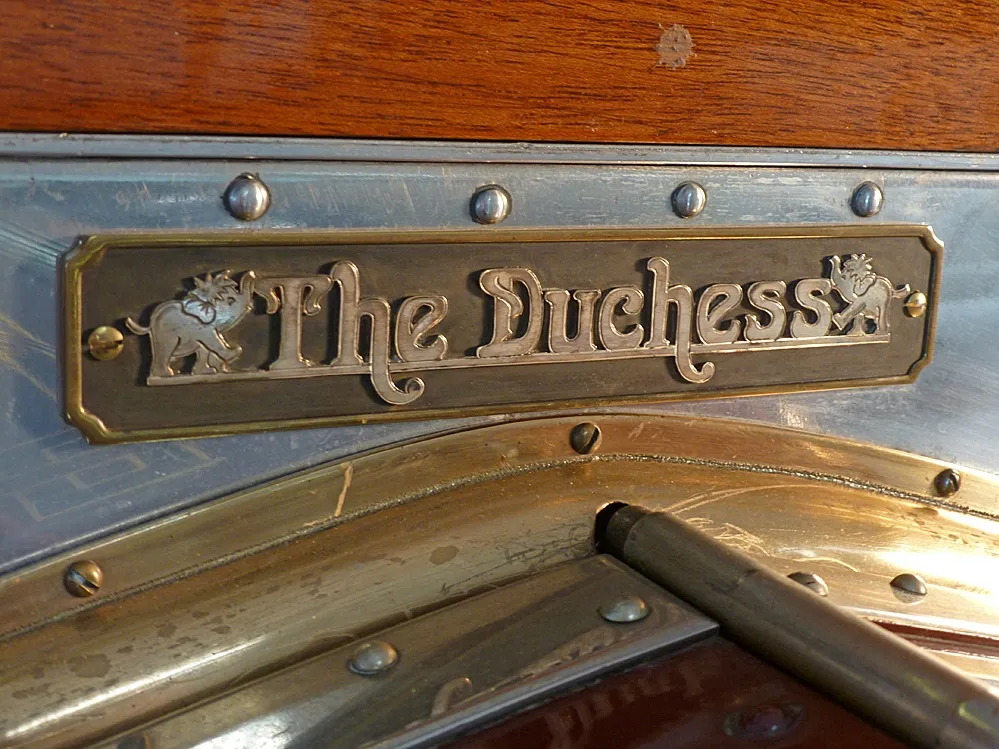
Rudyard Kipling frequently went for long tours on the continent with #27NA – he had insisted on a rear luggage grid to become fitted from the start. He had christened his new Silver Ghost "The Duchess" and repeatedly that name appears in his correspondence. Even in a poem is found a compliment which permits a fair guess he almost emotionally did cherish "The Duchess". He never found any reason to complain about the reliability of his new acquisition and indeed did express he believed the standard of service from the company to be exceptional. So it is well worth to check facts from the model's history to find out why a Rolls-Royce Silver Ghost could ignite such fascination and enthusiasm.
Engineering for the Ages
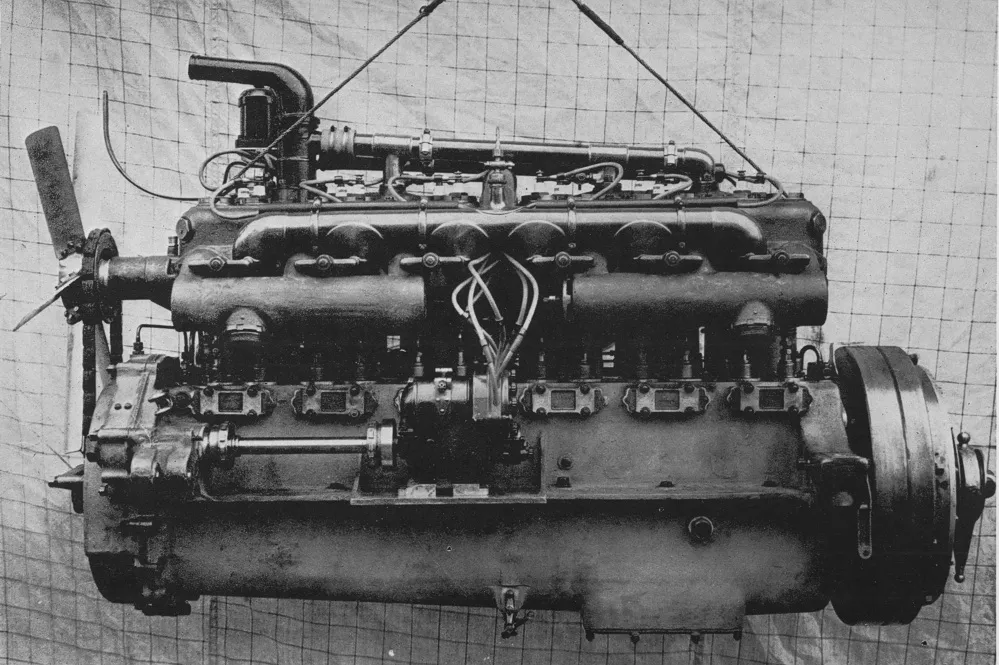
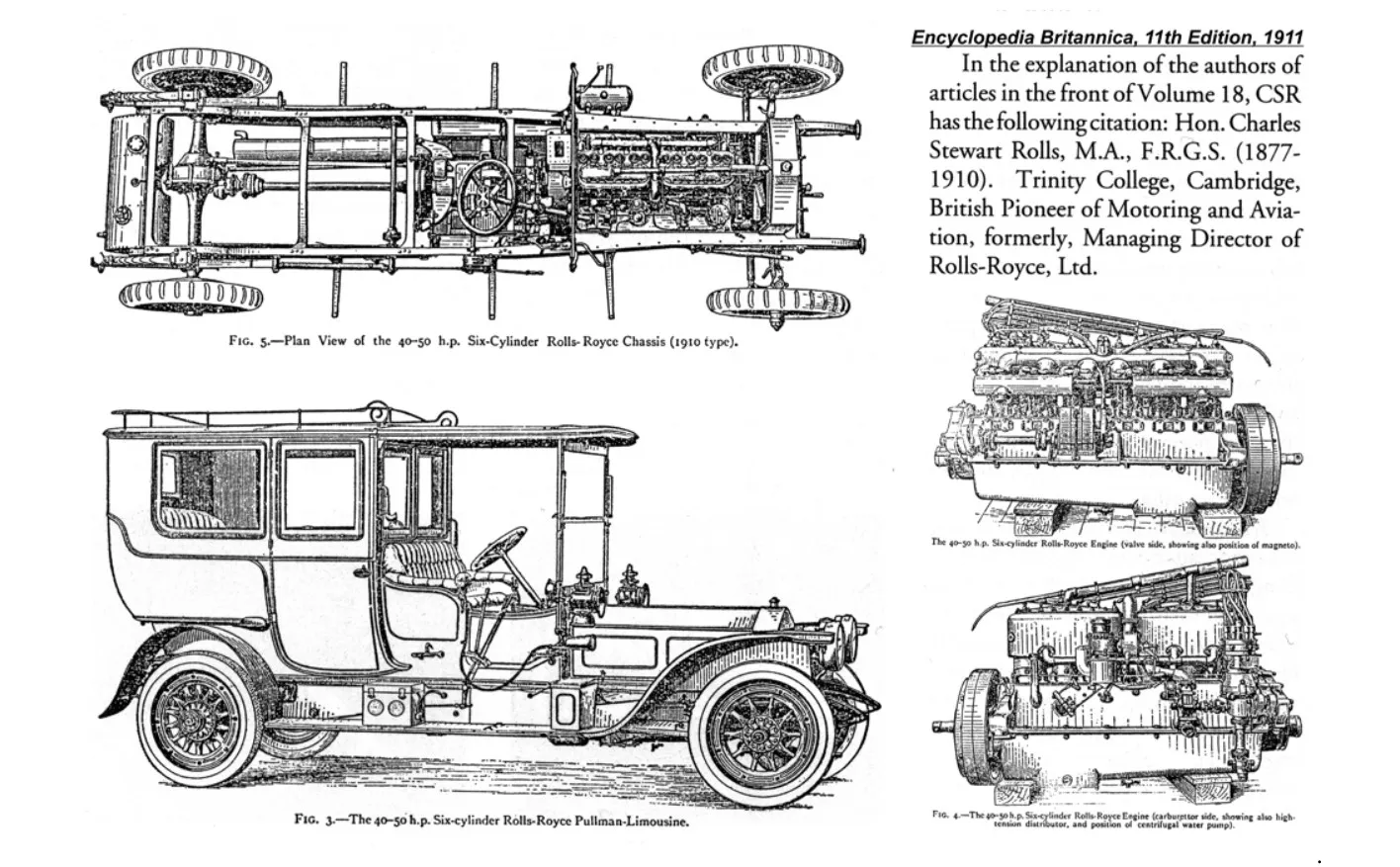
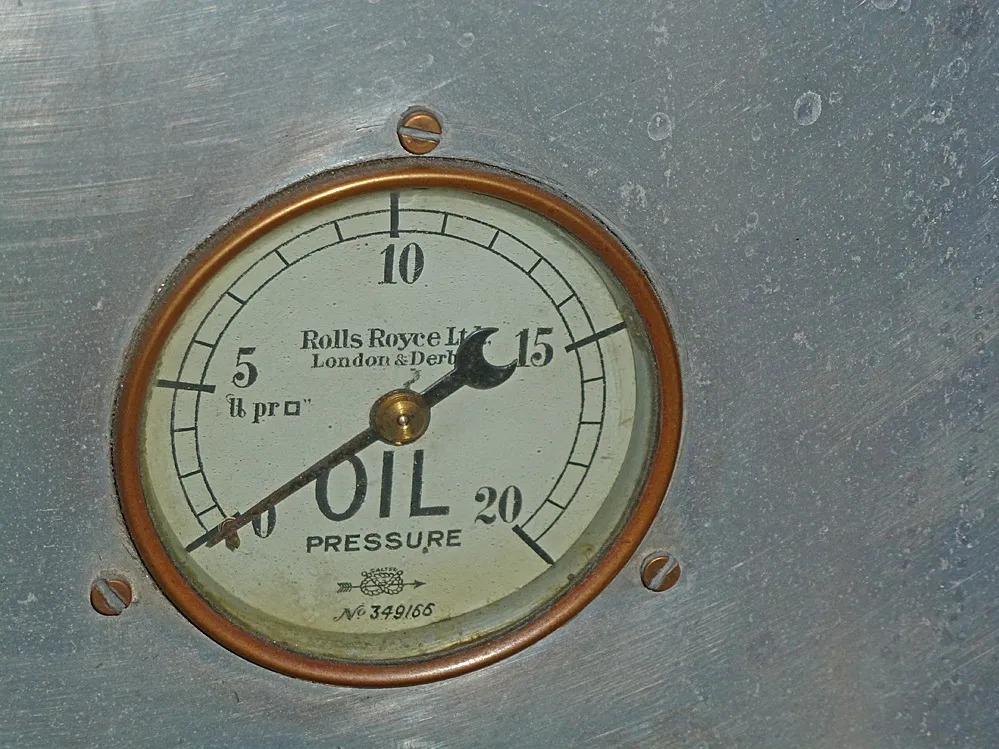
The motor car manufacturer's chief engineer F. Henry Royce had designed a 6-cylinder in-line-engine of more than 7 litres capacity to propel the Silver Ghost. To achieve a short-built engine and thus avoid any nasty influence from vibration of the crankshaft he had placed two cylinder blocks with 3 cylinders each on a common crankcase. Cylinder heads and cylinder blocks were cast in one piece, so non-detachable cylinder heads eliminated the weak spot of blown cylinder head gaskets. Pressure lubrication did guarantee sufficient oil-supply under all operating conditions that might be envisaged even with perhaps less careful chauffeurs in distant colonies. The big engine supplied considerable power that could be used without any of the components being stressed to limits.
The basic characteristic of the power source was its layout concentrating on reliability and longevity. The configuration of 'inlet over exhaust, i.e. inlet valves positioned top and exhaust valves placed to the side of the cylinder blocks offered room for large-sized waterways so no coolant problems were to be expected. The engine was suspended on the frame by a patented device that allowed the member of the frame relative movement to one another, e.g. on rough roads, without involving extra strain on the arms of the crank chamber. The radiator was mounted separately to permit no stress on any connections of the cooling system. Production was optimized as regards both, level of workmanship and quality of materials, regardless of cost. At the factory like a word from the bible was considered the idiom coined by F. Henry Royce:
"The quality remains long after the price has been forgotten!"
Each cylinder had two spark plugs because the ignition synchronized sparks from an induction coil, with single trembler, and from a high tension magneto. Two distinct systems were fitted, each entirely independent of the other. Usually both systems were in operation, however either could be used separately just in case there might occur malfunction as regards one of them.
The brakes were of internal, double-acting type with a floating fulcrum equalising the brake sideways so that the pressure on each brake shoe was equal. The foot-brake was this model's major brake and thus an improvement when compared to earlier models where the pedal had operated a brake on the cardan shaft and full braking power had been achieved only by using the hand-brake lever operating the brake drums of the rear wheels.
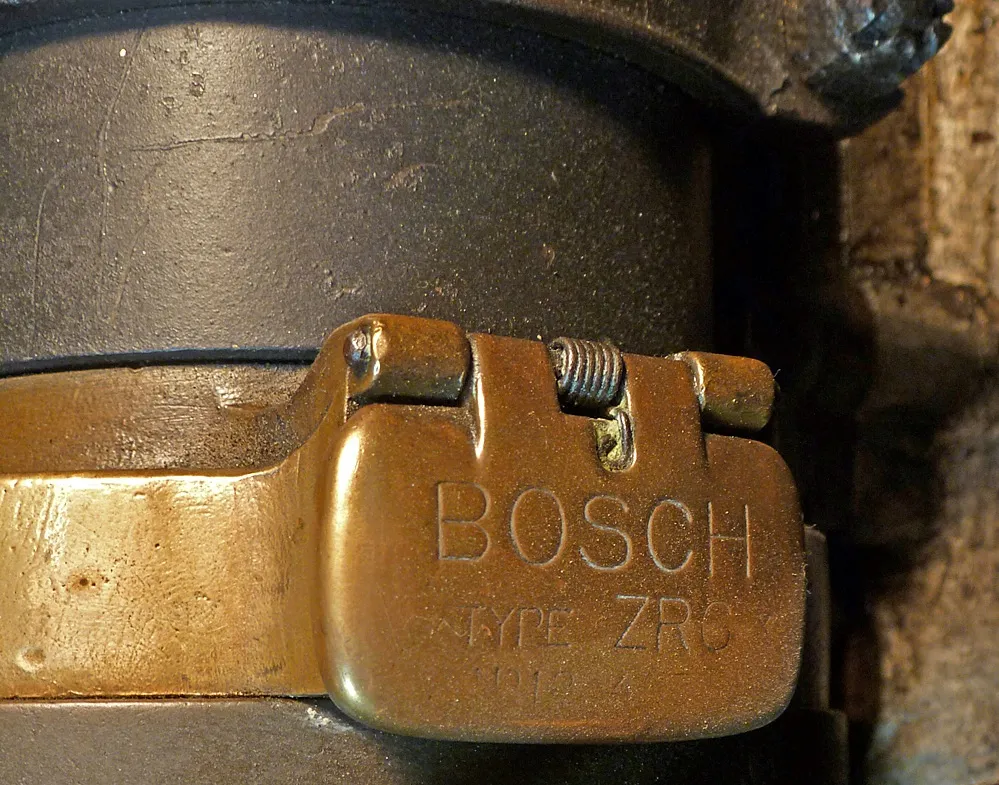
A three-speed gearbox of the sliding gear type with three forward speeds and one reverse was linked to cardan-shaft. Opposite to certain other manufacturers of powerful motor cars F. Henry Royce did trust in the advantages of a cardan-shaft rather than chain-drive. If at that time the term 'workaholic' already had been invented this had perfectly well described the devotion of the engineer to any task he met. Painstakingly careful he checked each and any detail of his creation and invested utmost care on step by step improvements. Having said that it is worth a note his character was such he did recognize with no pre-judice fine solutions found or provided by others. Although his success over many years had been with his factory producing electric equipment, as regards his motor cars he solely did accept imported Bosch magnetos, initially Type D6, later Type ZR6, for the Silver Ghost's magneto ignition.
At a later stage he decided after careful testing to offer for demanding Alpine tours steam separators, fitted to the filling orifice of the radiator – which had been invented by FIAT. A few Silver Ghost still have riveted to their gearbox housings a plate informing "The interlocking device on this gearbox is under license from Daimler-Motorengesellschaft, Stuttgart-Untertürkheim" – and in that case F. Henry Royce had been keen to make sure even the letter "ü" which is not found in the English alphabet to be engraved correctly.
The company's policy was one of permanent improvement not for progress' sake but to make sure to phase in modifications which did enhance the model's quality. This is obvious as regards an alteration in conjunction with increasing the engine's capacity to 7.4 litres – when the previously fitted 4 speed gearbox (with 'overdrive' in top gear) was substituted by a 3-speed gearbox with direct drive on 3rd gear. This is exactly the transmission featured by #27NA. – However to give a full picture is added here the information that after some time had passed for 'colonial chassis' optionally the alternative of a 4-speed gearbox with direct drive on 4th speed became available and that with a certain delay became series-standard for later models. Worth a note, not least because several early cars became "modernized" such, is the later introduction of electric starters and 4-wheel-brakes etc. However #27NA basically did remain un-altered at the level which had been original standard for that model-series in 1913.
Rolls and Royce
For the noble clients a Rolls-Royce Silver Ghost was a perfectly well fitting choice. Not alone due to the Silver Ghost's reliability and longevity but to a certain degree also a result of the work of Charles Stewart Rolls, the other of the company founders, whose enormous efforts deserve to become recognised. "Charlie" Rolls came from an aristocratic family, was immensely wealthy, and did enjoy fabulous connections to high and highest circles of the United Kingdom. He had – not too usual for a man of his social background – finished university with a degree in engineering. This however wasn't considered a faux-pas because he made his name as a sportsman, adventurous in motor racing and successful a pioneer aeronaut, too, who succeeded in various competitive ballooning contests. His family connections he widened by active 'networking' and that enhanced entry to the well-heeled circles where sometimes the layout of a new car to be acquired was considered as careful as the equipment of a new yacht. It cannot be denied: C.S. Rolls had a talent to contact the right people. After he had started trading motor cars he did win as top-member of his staff Claude Goodman Johnson who had been the first secretary of the Automobile Club of Great Britain and Ireland. Thus he could rely upon a personality who did know each of the automobilists of the United Kingdom whom perhaps C.S. Rolls himself had not yet met.
C.S. Rolls during his first meeting with F.H. Royce became confident he had found exactly the right partner to fulfil his desire of producing in England an automobile of exceptionally good standard. Up to then for his business C.S. Rolls & Co. he had imported products from the Continent because such as regards engineering were head and shoulders above the creations offered by the infant motor car industry of his native country.
From the very beginning automobiles from the new marquee Rolls-Royce were of superior quality – and built up an impressive image with victories in races and in long-distance trials. Charles Rolls complained that demand was considerably higher than could be met by the production from the factory in Manchester. At the works F.H. Royce was occupied with the task of improving the existing range of models and he devoted a major share of his activities on an entirely new project: the Silver Ghost. The latter was a breakthrough and thus had any qualification to become a bestseller.
Between the new model's debut in November 1906 and first deliveries to customer ca. mid-1907 merely half a year passed by. That has been an incredibly short period for ironing out minor failures detected during demanding tests but the result was proof Rolls-Royce had done their homework properly. The 12th car from the new model-series was punished to the limit under surveillance by officials from the Royal Automobile Club in a during a 14,000 miles (23,000 kilometres) Non-Stop-Tour and then it was dismantled completely. The checks by the RAC didn't show a single component which needed to become substituted; no wear beyond accepted tolerances anywhere. Despite that Rolls-Royce insisted to return the car into "as new condition" – and the expenses to achieve that summed up to only 2 Pound Sterling. Beside its power and reliability the car did impress with highly attractive appearance. A top class coachbuilder, the house of Barker, had fitted elegant "Roi-des-Belges" body featuring silver paintwork and dark green buttoned leather upholstery. Any polished parts of the coachwork were silver-plated. The car stood in solitary splendour like a jewel on wheels and a plate riveted to the firewall – according to a custom from christening yachts – gave off the name "The Silver Ghost". Almost predictably that concise designation became the household-word for this model whereas – especially during future years - the work's term 40/50 H.P. did enjoy but pale recognition.
The combination of engine and chassis was an appropriate basis to erect spacious limousine bodies as well as light tourers or coupés. The Rolls-Royce Silver Ghost did cover the whole spectrum of desires from representative occasions to touring on the Continent and even stood challenges in competitive events. Within a short period production could be increased to figures which did meet demand after in June 1908 an entirely new factory in Derby had been opened. There the entire equipment was 'State of the Art', the wide area included a test-course with curves sporting inclined banks and a test-jig had been installed that made it possible to expose a car within days to more stress than would be experienced over years on pot-holed poor roads.
Any statement had expressed: „All lights are green!" – in 1910 two incidents switched over to 'alarm light and sirens' to be triggered. In 1910 Charles Stewart Rolls aeroplane crashed during an air-show in Bournemouth. There and then he died instantly from severe injuries. The mourning period had not yet been over when the company was threatened to loose its chief engineer and thus a second major asset. F.H. Royce suffered a breakdown that he did survive only by very risky surgery and for the rest of his life he never recovered fully. His youth had been poor, extremely hard - almost opposite to that of his partner who was descendant from one of the country's noble families. Having lost his father when he was child the family did not even have sufficient money to pay until he finished his apprenticeship. With unbelievable energy by self-teaching he had filled gaps as regards school education and found a way from desperately poor circumstances to become the owner of a factory that produced electrical equipment. When his interest turned to motor car manufacturing he was already in his 40ies and in the partnership with C.S. Rolls he held a position similar to that of an 'elder statesman'. Royce's fragile health induced by overwork and malnutrition did collapse just when the Silver Ghost started to develop into a breathtaking success. After surgery he remained invalid and depended on assistance by a nurse over all the following years. He never again set a foot into his factory and worked instead at construction bureaus that were arranged for in his houses in England and at the French Riviera where he spent the winter months at Cote d'Azure. He did live until 1933 and all the Rolls-Royce cars were exactly made to what came either from his personal drawing board or had been developed by the team of devoted engineers who were controlled by the Grand Old Man.
Thanks to that constellation Rolls-Royce was in a position to counter when during the prestigious 'Alpine Trials 1912' (K.u.K. Österreichische Alpenfahrt 1912) a Rolls-Royce Silver Ghost didn't go up a steep incline at Katschberg Pass in the Austrian Alpes smoothly but occupants had to leave and the car had to re-start. In the following year a works team was entered and assistance was provided for a private entrant. That did the trick because the most carefully prepared Rolls-Royce Silver Ghost without any nasty incident conquered steepest passes and in the end were awarded the most prestigious trophy donated by a member of the ruling Imperial Family. Two weeks prior to that Don Carlos de Salamanca had won the Grand Prix of Spain behind the steering wheel of a Rolls-Royce Silver Ghost. The manufacturer beyond doubt had demonstrated the merits of its model and henceforth didn't enter any competitive events.
During World War I the Silver Ghost proved itself of being capable of tasks which during its conception had not even been considered. As Armoured Cars, with twin wheels at rear and carrying armour plating and weapons that made for a weight penalty of some 4 tons the model was sent to various theatres of war. Lawrence of Arabia's statement did become an idiom: "A Rolls-Royce in the desert was above rubies." As durable as the cousins employed in civil life's traffic many of what by then were veterans still were on active service in 1939; in Ireland the last examples were made redundant no sooner than 1956.
For an interim period between the wars did exist Rolls-Royce of America, Inc. and from 1920 onward Rolls-Royce Silver Ghost were produced at a factory in Springfield, Massachussetts, USA. Both variants, that made this side of the Atlantic and that from the USA sported identical shape of radiator and almost all had the mascot in the form of the "Spirit of Ecstasy".
The Marseille Story
Although the overview covers details from an extended time-frame it provides the background why Rudyard over many years remained loyal to his 1913 Rolls-Royce Silver Ghost, #27NA – and indeed for the rest of his life didn't switch to anything else but Rolls-Royce. A key-factor might have been one event in which #27NA was involved which was mentioned repeatedly and from time to time was altered so that in the end to separate truth and myth in what had become an anecdote was almost impossible. The facts: During a tour on poor roads in the hinterland of Cote d'Azure the car hit a rock protruding from the ground so front suspension and exhaust manifold were damaged. At reduced speed and not without trouble the hotel was reached where rooms had been booked in advance. Kipling mailed a telegram with a rudimentary address „Rolls-Royce, Nice" (that certainly challenged the staff of French Postal Services) and asked if such damage could be rectified. He and his family found themselves in a position to remain 'stranded' in a remote place over the Easter holidays. When during the next day he enquired at the reception if perhaps a reply had been received on his telegram he was informed that the problem already had been solved. During early morning hours mechanics from Rolls-Royce's agency in Nice had left the repair depot with a complete set of tools and all spare parts considered necessary and on arrival at the hotel had performed the repair. The anecdote which roots in this event does culminate in the point Kipling after his return to English soil had dispatched a note to Rolls-Royce asking for the invoice - and the answer had been there was no hint on any break-down hence no invoice could be sent; a Rolls-Royce would not 'fail to proceed'. It is essential here to state clearly that this is not an anecdote! A letter written by Kipling and addressed to the Managing Director of Rolls-Royce tells all these details and is most complimentary as regards the standard of Rolls-Royce's service. That document is 'smoking gun evidence' signed by a gentleman of the rank of Nobel Prize winner that the incident did happen and is neither fairy tale nor anecdote.
A Century of Owners
Rudyard Kipling as regards his Silver Ghost, #27NA, opted on no risk if that car perhaps when ageing might become less dependable. In 1921 he decided to part with the car. It was traded-in for a new Rolls-Royce Silver Ghost, #6UE, which was bodied by Hooper as a limousine. An additional note here that in 1928 a further change took place. Kipling acquired a Rolls-Royce Phantom I, #20AL, that in 1932 – partially as a reaction to the world economic crisis – was substituted by a 'Baby' Rolls-Royce. That was a 20/25 H.P. which after the demise of the author in 1936 was kept for some time by his widow.
For the Rolls-Royce, #27NA, it meant no 'relegation' when in 1921 it was taken over by a new owner. That was Baron Sir Peter Jeffrey Mackie a wealthy landowner from Scotland and a major shareholder in an established whisky-distillerie. Beside that Sir Peter J. Mackie was a member of the 'guild of writers' hence life of #27NA didn't change too much. Except from then onward it was garaged at estates in Scotland, in Glasgow to be exact and in Corraith, Kilmarnock. Despite Scots having a reputation to be penny-pitching this was not the case as regards this car that was kept in pristine condition with no expenses spared.
When in 1928 the car's ownership changed again that most presumably was after a meticulous inspection. George Albert Palfrey with an address in London's noble Mayfair area is listed in Rolls-Royce factory records as a client who over the years acquired no less than 19 Rolls-Royce that had been pre-owned and he also acquired two Rolls-Royce brand new. This might be an indication he either became tired of a motor car within short intervals or perhaps he was in the trade? In 1931 he sold #27NA and from then onward for several decades remains a gap as regards the history of #27NA.
As per present standard of knowledge with an interim of almost 30 years the track can be followed again. In 1960 a photo of that Rolls-Royce Silver Ghost was taken at a classic car meeting and that photo is proof certain parts of the coachwork no longer were there. The owner at that time was a certain Allan John M. Brownridge from Watford, Hertfordshire. He had mounted two seats to the chassis and let the car in such rudimentary form well into the year 1968.
Starting in 1968 there are notes on a certain Kenneth C.E. Hart from Ormesby, Middlesborough, Yorkshire, who is reported to have been the owner of a garage and repair shop. Over quite some time is remained an un-answered question whether or not information was correct this new owner invested labour and expenses in keeping the car in good-running condition and enhancing it by fitting an appropriate coachwork onto the chassis. Research with deep analysis by the expert John Fasal, author inter alia of various standard books e.g. on Rolls-Royce Silver Ghost and on Rolls-Royce 20 H.P. brought a result: There had been a "swop" with an existing 2-Seater Body from another Edwardian Rolls-Royce Silver Ghost having been transplanted onto the chassis #27NA.
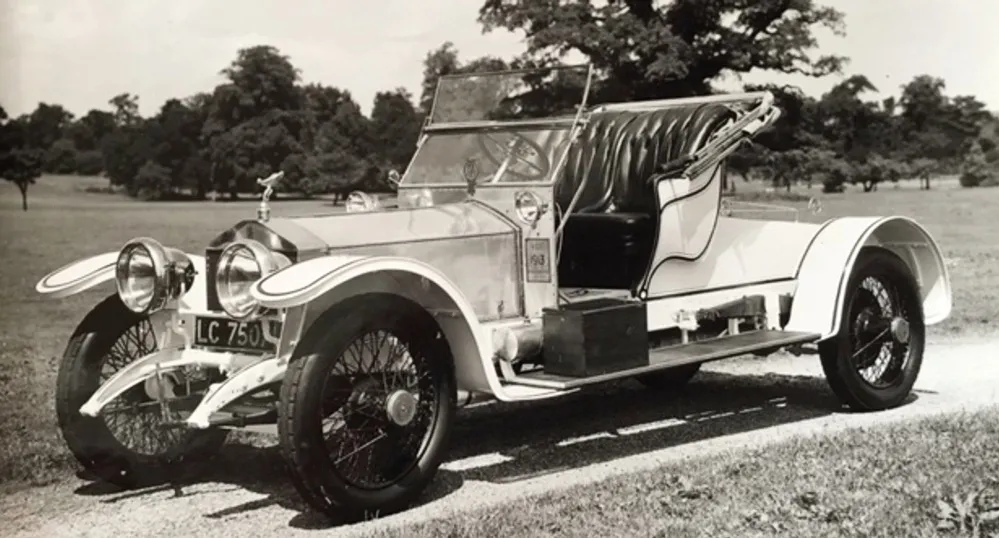
Following such enhancements to make sure the cars technical components performed accurately and to arrange for an attractive coachwork to be fitted in relatively short sequence further changes as regards ownership did happen. One in 1973 to J.W. Dyson from Hambleton, Yorkshire, was followed a year later in 1974 by one to Alec Norman from Bedford. The latter sold the car and it is not entirely clear if he did so to the dealer 'Coys of Kensington' or to Charles A.R.D. Howard, who had been with the staff of Coys of Kensington before he became an independent dealer in classic cars.
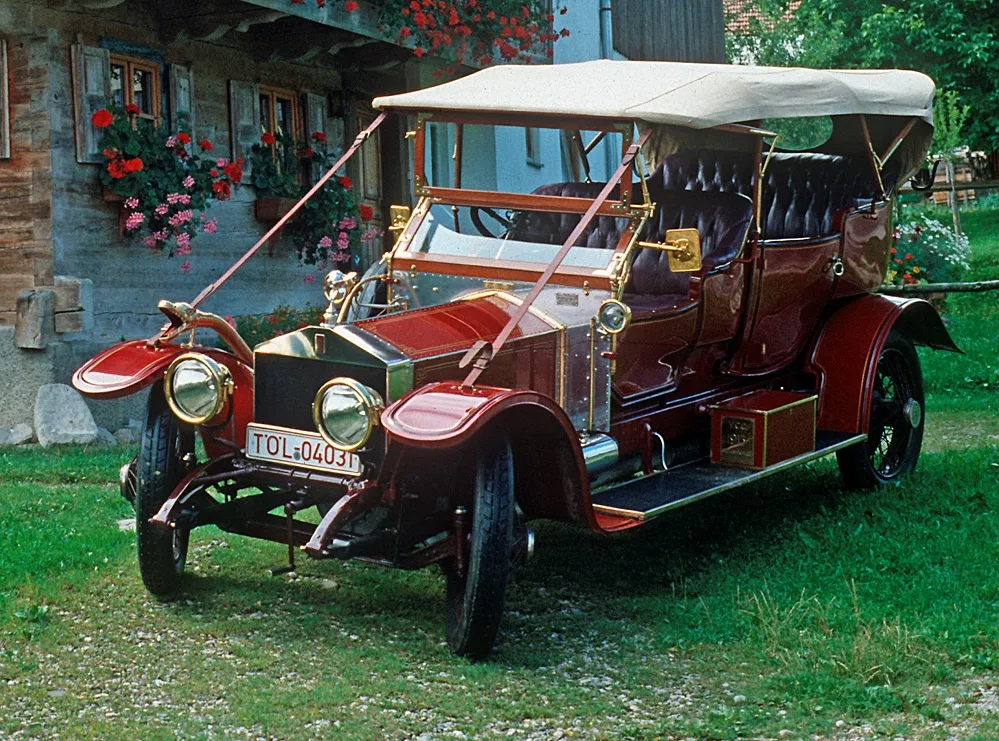
In any case it has been during the decade between 1974 and 1984 when #27NA in the course of a painstaking careful process of restoration became subject of a complete overhaul of all technical components and was fitted with fabulously elegant new tourer coachwork executed to very high standard. The result was a classic car of pinnacle quality. As regards the design of the body the choice had been a 'Roi-des-Belges' – which had been a particular popular coachwork-variant during the period prior to the Great War. The name is rooting in the fact it had been a design favoured by H.M. The King Leopold of Belgium – and an addition was whispered gossip because it was favoured by his mistress Cleo de Merode he was so very fond of this. In the case of #27NA the coachbuilder Wilkinson was ordered to build the new body. That was a company of very fine reputation whose work was applauded by the most discerning collectors among those in the Rolls-Royce Enthusiasts' Club. The craftsmen at Wilkinson performed their skills strictly complying with the procedures from traditional coachbuilding, often rooting in the era of horsedrawn carriages. Their creations based in skilful workmanship and received well-deserved compliments, praise indeed. There have been many who did believe no new body had been fitted onto chassis #27NA but that still was the original Hooper coachwork; such idea was accepted as appropriate conclusion for quite some time.
Hooper & Co (Coachbuilders), London, has been a leading coachbuilder of the British Empire. Beside holding the Royal Warrant as "Coachbuilders by Appointment" (through eight reigns from the early 19th Century onward) the company had many crowned heads, aristocracy and dignitaries among their clients. The coachbuilder Hooper had been entrusted, too, by Rudyard Kipling to erect the original coachwork on the chassis #27NA. Wilkinson did achieve to seamlessly amalgamate certain elements from the 'old' body with the new components they made strictly complying with age-old traditions of coachbuilding skills in top-level quality.
Red paintwork accentuated by gold coachlines was combined with buttoned seats whose leather's colour is a special shade of lilac. The colour of the interior is exactly what after the demise of H.M. The King Edward VII. became 'en vogue' because the new Souvereign, i.e. H.M. The King George V., had opted on this as the mourning colour of the English Royal Household. What repeatedly in various publications was defined as „Edwardian Mourning Colour" indeed became "en vogue".
In 1984 the German bestseller-author Philip Vandenberg decided to acquire the Rolls-Royce Silver Ghost, #27NA. He was a dedicated collector; in literature is documented he had a variety of exceptional fine Rolls-Royce motor cars in his custody. The gentleman neither did lack enthusiasm nor the financial background – which as regards maintenance and service of high-value classic cars had become an essential fact – to guarantee optimum conditions as regards storage, operation and service of #27NA.
But one indication how fascinated the collector had been by the new addition to his collection of motor cars is obvious from the most detailed research he invested in compiling a history of #27NA. Rightfully considered a motor car impressing with elegant lines and technical perfection the added bonus of its first owner having been a most prominent personality held in high esteem around the globe offered a good basis to point out the outstanding merits in publications. It was no disadvantage, of course, that Philip Vandenberg as a tremendously successful author had access to a 'network' that enhanced to position illustrated reports on #27NA in various magazines with high print-runs. It must be also mentioned that in England Lord John Cope, member of The House of Lords, whose research on the life of Rudyard Kipling is a yardstick of painstaking meticulousness, in his 2012 dissertation "Rudyard Kipling – motor car enthusiast" did devote an entire chapter to this Rolls-Royce Silver Ghost, #27NA.
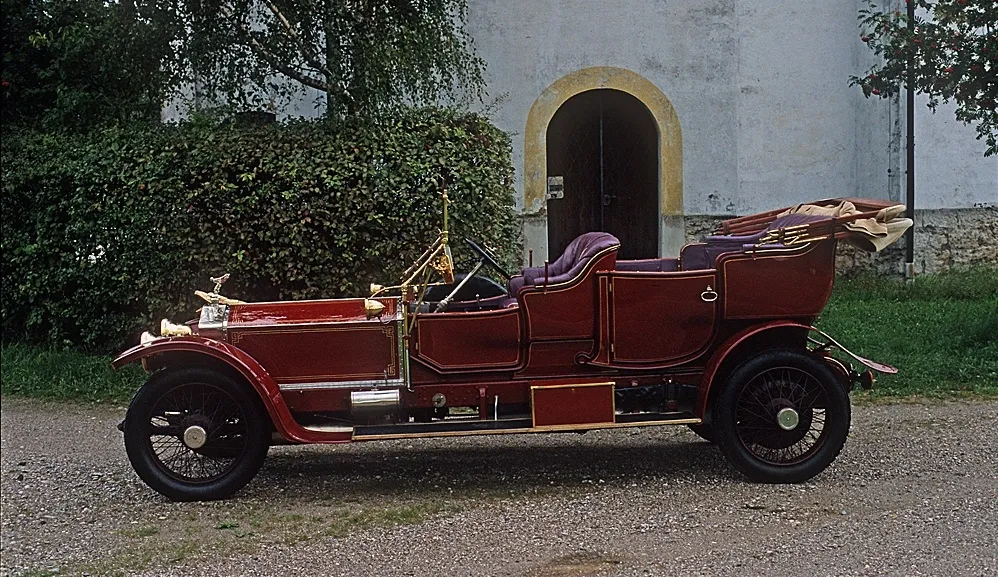
Over all the decades when the car has been in the custody of Philip Vandenberg it did enjoy careful maintenance and has been sparingly at infrequent intervals. Its condition even at close inspection couldn't be estimated other than very good. Nonetheless it was enhanced by considerate modifications to reach an even higher level. One example is the substitution of the wooden windscreen frame by one made in metal exactly to the pattern of 'Beatonson' (in the era when the Silver Ghost had been in production that was a top-supplier for such components). From the last change of ownership in the 2010s did not result any changes of conditions as regards maintenance and service regardless of expenses. But one example: The tail lamps had been sourced from a fairly modern catalogue and had been installed to comply with German traffic regulations – such modern tail lamps though were substituted by 'correct' tail lamps of the 'diver's helmet variation' which are exactly fitting because such in 1913 had been contemporary equipment for a motor car.
Scars That Tell the Story
Worth a note is a tiny dent at the radiator mask remained untouched. That is a feature from the "History" of #27NA. Neither any of those who previously had #27NA in their custody nor the present custodian did consider rectification of that spot. A brief explanation: A careless driver of a pony-cart had almost caused the Rolls-Royce Silver Ghost with Rudyard Kipling on board to become involved in a serious accident. Only the quick reaction of Kipling's chauffeur did avoid a fatal crash. Hence merely the mudguard above the left wheel had suffered a scratch; that was repaired immediately. In addition a tiny dent spoiled the radiator mask; that remained. However the incident from July 1915 was reason for Kipling to write a letter with no uncertain content to the employer of the cart-driver. That letter with perfectly well chosen words and articulation made "into the literature" as regards Kipling. Excerpts from what Kipling had written are attached to this report.
It is a fact that over the recent decade the Rolls-Royce Silver Ghost, #27NA, has been used in traffic even considerably less than during the first century of its life. Over the last years the engine was started only on special occasions and one or the other tour added but negligible amounts to the mileage. Most presumably Rudyard Kipling would cherish the idea that more than 100 years after original delivery his Rolls-Royce Silver Ghost, #27NA, not only survives but does so in solitary splendour.
July 2026, Schwerte, Germany
Klaus-Josef Roßfeldt
ROLLS-ROYCE SILVER GHOST
No. made and years in production:
6.173 made in Manchester (GB) 1906-1908, made in Derby (GB) 1908-1925
1.703 made in Springfield, Massachusetts (USA) 1921-1926
| Engine | 6 cylinder in-line configuration; two cylinder blocks with three cylinders each, non-detachable cylinder heads; side valves operated by single camshaft; seven bearing crankshaft; bore x stroke 114.3 mm x 114.3 mm (4 ½ in x 4 ½ in); engine size 7,036 c.c. (from 1910 / #1799 onward bore x stroke 114.3 mm x 120.7 mm (4 ½ in x 4 ¾ in); engine size 7,428 c.c. which is true for #27NA); two independent ignition systems, one system coil and battery, the other system high tension magneto, separate plugs for each system; pressure lubrication; Rolls-Royce two-jet type carburettor with water-heated throttle valve (from 1923 onward exhaust-heated); estimated power output 48 H.P. at 1,250 rpm (later models achieved approximately 80 H.P. at 2,250 rpm) |
| Transmission | Cone type clutch; 4 speeds and reverse, direct drive on 3rd gear, overdrive top (from 1910 / #1799 3-speed gearbox with direct drive on top which is true for #27NA; from 1912 optionally 4-speed gearbox, direct drive on top and that became standard after 1913 / #32MA); cardan shaft; fully floating live rear axle; spiral bevel spur-wheel differential |
| Chassis | Pressed steel, parallel girder with tubular cross members; semi-elliptic springs front, platform rear suspension (from 1908 three-quarter elliptic rear springs; from 1912 cantilever rear springs which is true for #27NA), friction type shock absorbers; footbrake acting on transmission (from 1913 footbrake operating on rear wheels, Chassis-Series "A" which is true for #27NA; from 1924 4-wheel-brakes with gearbox-driven mechanical servo), handbrake operating brake drums on rear wheels |
| Dimensions | Wheelbase 135 ½ in (3,441.7 mm) or 143 ½ in (3,644.9 mm) (from 1913 short wheelbase abandoned, from 1923 wheelbase 144 in or 150 ½ in); track 56 in (1,422.4 mm); tyre size front 875 x 195 or 880 x 120, tyre size rear 880 x 120 or 895 x 135 (from 1913 tyre size front and rear 895 x 135, from 1923 tyre size front and rear 33 x 5); weight without body and tyres 2,072 lb (941.8 kg) or 2,184 lb (992.7 kg) |
| Performance | Late models with lightweight body max. speed 84 mph (135 km/h); streamline bodied sport version max. speed 101.5 mph (163,3 km/h) |
List of Owners (in Chronological Order)
| Years | Owner | Address / Notes |
|---|---|---|
| 1913 – 1921 | Joseph Rudyard Kipling | Batemans, Burwash, Sussex –GB- >> author and poet, 1907 awarded Nobel Prize in Literature |
| 1921 - 1928 | Sir Peter Mackie, 1st Baronet | Glasgow and Corraith, Kilmarnock, Scotland >> Whisky-Producer and landowner and author |
| 1928 - 1931 | George Albert Palfrey | 26 Mount Row, Carlos Place, Mayfair, London W1; 315 Mount Row, Westminster, London W1 >>listed as owner of all in all 21 Rolls-Royce (the majority of these were acquired 'pre-owned' though for 2 he was noted as first owner); perhaps trading in motor cars (?)<< |
| 1960 – 1968 | Allan John M. Brownridge | Watford, Hertfordshire –GB- (1963, Rosebud Cottage, Guilden Morden, Royston, Hertfordshire –GB-) |
| 1968 - | Kenneth C.E. & Angela I. Hart | 6a Church Lane, Ormesby, Middlesbrough, Yorkshire (1966; The Old Mill, Barwick Lane, High Leven, Yarm, Stockton-on-Tees, Cleveland TS15 9JR –GB-) >>Proprietors of a garage<< |
| 1973/74 | J.W. Dyson | Greystones, Chapel Street, Hambleton nr. Selby, Yorkshire YO8 9JG –GB- |
| 1974 - | Alec Norman | Westcote, West Road, Gamlingay, Sandy, Bedfordshire (private) & 11 Sergeants Way, Claxton Road, Bedford MK41 0EH (business) >>Proprietor of a garage<< |
| ?? | Charles A.R.D. & Ute Howard (ex Coys of Kensington 1976) | 15 Launceton Place, London W8; 14/15 Queens Gate Place Mews, London SW7 5BQ; Sycamore Ridge, Brownshill, Stroud, Gloucestershire GL6 8AS (2000); Shepherds Hoe, The Hithe, Rodborough Common Stroud –GB- >>Dealer in vintage and classic motor cars<< |
| 1984 – 2016 | Philip Vandenberg (born 20th September 1941 as Hans Dietrich Hartel) | Villa Vandenberg, 82623 Baiernrain/Dietramszell, -D- >>Reporter and bestseller-author<< |
| 2016 - | Freiberger, Germany |
Publications List etc.
(listed as per date of publication)
Books:
- Under My Bonnett by G.N.R. Minchin, G.T. Foulis & Co. Ltd. (Great Britain) 1950, quoting Kipling's letter from 25th March 1925 as regards perfect RR-service.
- Rudyard Kipling, His Life and Work by John Carrington, Macmillan London (Great Britain) 1955.
- Rolls-Royce, The Complete Works, The best 599 Rolls-Royce Stories by Mike Fox and Steve Smith, Faber & Faber, London (Great Britain) and Boston (USA) 1984, pages 60 and 145f.
- Rolls-Royce – Die 500 besten Stories by Mike Fox and Steve Smith, Econ Verlag, Duesseldorf (Germany), Vienna (Austria) 1985; pages 57 and 147f.
- Rolls-Royce Automobile und Bentley seit 1931 by Halwart Schrader, Verlag Schrader Automobil-Buecher Handelsgesellschaft mbH, Munich (Germany) 1988; page 14 two photos.
- Rolls-Royce Cars and Bentley from 1931, The Complete History by Halwart Schrader, Dirk Nishen Publishing, London (Great Britain) 1989; page 14 two photos.
- Rolls-Royce und Bentley, Alle Modelle, Geschichte, Fakten, Daten by Klaus-Josef Roßfeldt, BLV Verlagsgesellschaft mbH, Munich (Germany), Vienna (Austria), Zurich (Switzerland) 1989; pages 32/33 four photos.
- Rolls-Royce and Bentley, All models from 1904, Development History, Production Data, Technical Specifications by Klaus-Josef Roßfeldt, Haynes Publishing Group, Sparkford, Nr. Yeovil (Great Britain) 1991; pages 32/33 four photos.
- Rolls-Royce und Bentley, Alle Modelle, Geschichte, Fakten, Daten by Klaus-Josef Roßfeldt, licensed edition for Heel Verlag GmbH, Koenigswinter (Germany) 1993; pages 32/33 four photos.
- The Edwardian Rolls-Royce von John Fasal und Bryan Goodman, 2-bändiges Kompendium vertrieben über Thames View (Holdings) Ltd., (GB), 1994; Seite 692.
- Lexikon berühmter Fahrzeuge von Apollo 11 bis Zeppelin by Siegfried Tesche, Eichborn AG, Frankfurt (Germany), April 2003; pages108 ff „The Duchess – Der Rolls-Royce von Rudyard Kipling".
- „…und so habe ich mir denn ein Auto angeschafft"; Schriftsteller und ihre Automobile by Ulf Geyersbach, Nicolaische Verlagbuchhandlung GmbH, Berlin (Germany) 2006; pages 14ff chapter „Rudyard Kipling oder Der Rolls-Royce im Asphaltdschungel".
- A Celebration of Excellence, The Rolls-Royce Enthusiasts' Club Yearbook 2012, Regal Press Ltd. (Great Britain) 2011; pages 52ff, illustrated report "Rudyard Kipling – motor car enthusiast" by Lord John Cope.
Newspapers, Magazines, etc.:
- RREC Bulletin, Rolls-Royce Enthusiasts' Club (Great Britain), No. 144, 1984; "Reminiscences of Bill Morton", i.e. reminiscences by Morton of Kipling's chauffeur Harry Fleck.
- Rolls-Royce und Bentley Limited Edition Photo-Folder (500 copies) by Klaus-Josef Roßfeldt, Verlag Karl Brinkmann, Sonsbeck (D), 1985; Chromolux-Priont No. 1 of 12, selected from specially taken photo-series of Rolls-Royce and Bentley motor cars.
- PENTHOUSE, German Publishing Ltd. London (Great Britain), No. 9, September 1987; pages 90ff illustrated report „Die Herzogin" by Philip Vandenberg.
- Auto, Motor und Sport, Vereinigte Motor-Verlage GmbH & Co. KG, Stuttgart (Germany), Issue 23, 7th November 1987; pages 234ff, illustrated report „Kiplings Geist" by Philip Vandenberg.
- BUNTE, Burda GmbH, München (Germany), Issue 34, 18th August 1988; pages 48ff, illustrated report „Maenner – und ihr Spielzeug", photo pages 50/51.
- Autowelt, Auto Becker, Düsseldorf (Germany), Yearbook 1989; pages 160ff, illustrated report „Rumfords Erbe, 200 Jahre Englischer Garten: Muenchens Traumpark als Treffpunkt des britischen Autoadels", photo page 160.
- RREC Advertiser, Rolls-Royce Enthusiasts' Club (Great Britain), No. 103, January 1991, Cover, advert by Hooper & Co. (based on incorrect information the Roi-des-Belges coachwork had been made by Hooper).
- RREC Bulletin, Rolls-Royce Enthusiasts' Club (Great Britain), No. 201, November/December 1993, page 10; photo R-R Silver Ghost, #27NA, test rig.
- RREC Magazin, Rolls-Royce Enthusiasts' Club, German Section, Issue No. 1, March 2013; pages 32ff, illustrated report "Die Duchess-Story", Part 1 by Philip Vandenberg.
- RREC Magazin, Rolls-Royce Enthusiasts' Club, German Section, Issue No. 2, June 2013; pages 10ff illustrated report "Die Duchess-Story", Part 2 by Philip Vandenberg.
- RREC Bulletin, Rolls-Royce Enthusiasts' Club (Great Britain), No. 322, January/February 2014; pages 44ff; "The Duchess Story" Part 1, illustrated report by Philip Vandenberg.
- RREC Bulletin, Rolls-Royce Enthusiasts' Club (Great Britain), No. 323, March/April 2014; pages 44ff; "The Duchess Story" Part 2, illustrated report by Philip Vandenberg.
- Das Schnauferl, Allgemeiner Schnauferl Club (Germany), Issue 3/2017, Cover-photo from 2013 plus illustrated report on R-R Silver Ghost pages 9ff.
- RREC Magazin, Rolls-Royce Enthusiasts' Club, German Section, Issue No. 1, March 2017; pages 40/41, illustrated report „Mythos und Wahrheit" by Klaus-Josef Roßfeldt.
- The Silver Ghost Tourer, Silver Ghost Association (USA, Issue 1/ 2019, pages 3028/3029 illustrated report „Rescue of 'The Duchess', Rudyard Kipling's Ghost – 27NA" by Klaus-Josef Roßfeldt.